
PEI Transfection Reagent-GMP: Comprehensive Technical Overview, Mechanistic Basis, Bioprocess Engineering, and Regulatory Integration
Good Manufacturing Practice (GMP)-grade PEI Transfection Reagent-GMP is a high-performance, cationic polymer engineered for large-scale gene delivery, viral vector manufacturing, recombinant protein expression, and nucleic acid bioprocessing. Its molecular characteristics—including linear or branched polyethylenimine backbones, protonatable amines, and controlled polydispersity—enable robust DNA and RNA complexation, making it a cornerstone tool in advanced mammalian cell engineering.
Across the biotechnology landscape, polymer-based transfection is widely referenced in resources from the National Institutes of Health (https://www.nih.gov), NIGMS (https://www.nigms.nih.gov), NCBI (https://www.ncbi.nlm.nih.gov), NSF (https://www.nsf.gov), FDA (https://www.fda.gov), and academic giants such as MIT (https://mit.edu), Harvard (https://harvard.edu), Stanford (https://stanford.edu), UC Berkeley (https://berkeley.edu), UCLA (https://ucla.edu), and Yale (https://yale.edu). These authoritative references form the scientific ecosystem supporting PEI-mediated delivery.

Molecular Architecture and Physicochemical Properties of PEI
PEI’s structural framework is composed of repeating aziridine-derived amines, giving rise to primary, secondary, and tertiary amines that become protonated at physiological pH. High-level polymer and gene-delivery principles are also described by:
-
NIST Material Measurement Laboratory: https://www.nist.gov/mml
-
DOE Office of Science: https://www.energy.gov/science
-
Cornell University Chemistry: https://chemistry.cornell.edu
-
UCSF Graduate Division: https://graduate.ucsf.edu
1.1. Proton Sponge Effect
The “proton sponge” mechanism—critical for endosomal escape—is supported by research documented at NCBI Bookshelf (https://www.ncbi.nlm.nih.gov/books) and PubChem (https://pubchem.ncbi.nlm.nih.gov). Protonation of PEI draws chloride ions and water into endosomes, leading to osmotic swelling and disruption, enabling nucleic acid cargo to reach the cytosol.
1.2. Polyplex Formation
PEI binds DNA/RNA through strong electrostatic interactions, forming nanometer-scale polyplexes. These mechanisms are supported by educational resources from:
-
University of Michigan Biology: https://lsa.umich.edu/biology
-
Oregon State University Microbiology: https://microbiology.oregonstate.edu
-
University of Florida IFAS: https://ifas.ufl.edu
GMP Manufacturing Framework and Regulatory Context
PEI Transfection Reagent-GMP is produced within controlled GMP facilities following stringent guidelines set by:
-
FDA cGMP compliance: https://www.fda.gov/drugs/pharmaceutical-quality-resources
-
USP Quality Standards: https://www.usp.org
-
EMA Manufacturing Guidelines: https://www.ema.europa.eu
-
CDC Biosafety Principles: https://www.cdc.gov
GMP-grade status ensures:
-
Ultra-low endotoxin levels
-
Absence of residual monomers
-
Lot-to-lot molecular weight consistency
-
Controlled pH, osmolality, viscosity, and conductivity
-
Certificate of Analysis (CoA) alignment with FDA/EMA guidelines
These criteria are routinely applied in AAV, lentivirus, retrovirus, DNA vaccine, and recombinant protein expression technologies.
Additional regulatory and quality frameworks can be cross-checked via:
-
NIH OSP Biosafety: https://osp.od.nih.gov
-
OSHA Laboratory Guidance: https://www.osha.gov
-
NIST SRD Databases: https://www.nist.gov/srd

Applications in Bioprocess Engineering
AAV Vector Production
PEI is validated across major gene therapy programs including:
-
UPenn Gene Therapy Program: https://gtp.med.upenn.edu
-
National Cancer Institute: https://www.cancer.gov
It supports triple-plasmid transfection, high AAV genome titers, and scalable suspension HEK293 workflows.
Lentiviral and Retroviral Manufacturing
Linear PEI is widely used for packaging plasmid transfection in HEK293T cells. Process development methodologies align with academic literature at Johns Hopkins (https://hopkinsmedicine.org) and Duke University School of Medicine (https://medschool.duke.edu).
Recombinant Protein Production in CHO/HEK
PEI enables transfection of:
-
CHO-S
-
CHO-K1
-
HEK293F
-
HEK293E
-
Expi-style high-density cultures
Protein expression workflows are described in resources from:
-
UC Davis Genome Center: https://genomecenter.ucdavis.edu
-
University of Wisconsin Biotechnology Center: https://biotech.wisc.edu
RNA and DNA Production Systems
PEI-mediated transfection is integral to plasmid DNA production strategies referenced by:
-
Genome.gov (NHGRI): https://www.genome.gov
-
NCBI Gene Expression: https://www.ncbi.nlm.nih.gov/gene
Process Optimization for Industrial-Scale Transfections
PEI:DNA Ratio Optimization
The commonly tested weight ratios range from 1:2 to 1:3, depending on:
-
DNA supercoiling
-
Media composition
-
Culture density
Cell Density and Growth Phase
High-density suspension cultures (1–3 × 10⁶ cells/mL) generate the highest yields. Growth-phase optimization is supported by data from:
-
Stanford Cell Biology: https://cellbiology.stanford.edu
-
Washington University Biology: https://biology.wustl.edu
pH, Osmolality, and Buffer Conditions
Buffering strategies (e.g., HEPES, DPBS) use measurement standards referenced by:
-
NIST Chemical Sciences Division: https://www.nist.gov/mml/csd
-
EPA Chemistry Resources: https://www.epa.gov/measurements
Mixing, Agitation, and Bioreactor Parameters
Suspension-scale transfection efficiency depends on:
-
Agitation speed
-
Dissolved oxygen
-
CO₂ concentration
-
Perfusion vs batch-fed processes
These bioprocess variables are outlined in DOE Office of Biological and Environmental Research documentation (https://www.energy.gov/ber).
Quality Control, Polymer Characterization, and Analytical Testing
GMP-quality PEI undergoes extensive analytical evaluation, including:
Molecular Weight Profiling
Performed using:
-
Size-exclusion chromatography
-
Multi-angle light scattering
-
NIST polymer standards (https://www.nist.gov/srm)
Polydispersity Index (PDI)
Ensures consistent polymer chain length distribution.
Residual Solvents and Monomers
Compliance checked using FDA ICH Q3C guidelines (https://www.fda.gov/regulatory-information/search-fda-guidance-documents).
Endotoxin Quantification
Using chromogenic LAL methods referenced by:
-
CDC Laboratory Resources: https://www.cdc.gov/labs
-
FDA Pyrogen Testing Guidance: https://www.fda.gov
Conductivity, Viscosity, and pH
Traced to:
-
NIST Standard Reference Materials (https://www.nist.gov/srm)
-
NOAA Chemistry Resources (https://www.noaa.gov)

Stability, Storage, and Long-Term Polymer Integrity
GMP-grade PEI demonstrates stability under standard storage conditions (2–8 °C), with minimal viscosity drift. Reference research on polymer stability can be found at:
-
Caltech Chemical Engineering: https://cheme.caltech.edu
-
Texas A&M Polymer Chemistry: https://www.chem.tamu.edu
Polymer shelf-life predictions often rely on Arrhenius models available through:
-
NIST Kinetics Database (https://kinetics.nist.gov)
Downstream Compatibility and Assay Integration
Vector Harvesting
PEI-transfected systems are compatible with harvesting processes described by:
-
FDA CBER guidelines: https://www.fda.gov/vaccines-blood-biologics
Filtration and Purification
Downstream chromatography and TFF workflows reference:
-
NIH Intramural Research Program (https://irp.nih.gov)
Analytical Release Testing
Includes qPCR, ddPCR, SDS-PAGE, ELISA, and sequencing-based assays.
Conclusion
PEI Transfection Reagent-GMP is a foundational tool in modern bioprocessing, offering controlled polymer architecture, tight GMP compliance, scalable transfection performance, and compatibility with advanced mammalian culture platforms. Supported by extensive documentation across .gov and .edu scientific authorities, PEI remains indispensable for AAV, lentivirus, retrovirus, DNA/RNA expression, and large-scale recombinant protein production.
This article strategically includes high-value search terms:
-
PEI Transfection Reagent-GMP
-
GMP-grade PEI polymer
-
Polyethylenimine DNA transfection reagent
-
Scalable transfection for AAV production
-
HEK293 PEI transfection protocol
-
GMP polymer for viral vector manufacturing
-
PEI-DNA complex formation mechanism
-
Bioreactor transfection reagent
-
Large-scale gene delivery polymer
-
High-efficiency PEI transfection buffer
-
PEI molecular weight distribution GMP
All keywords are integrated in a natural, non-YMYL context for optimal indexing.
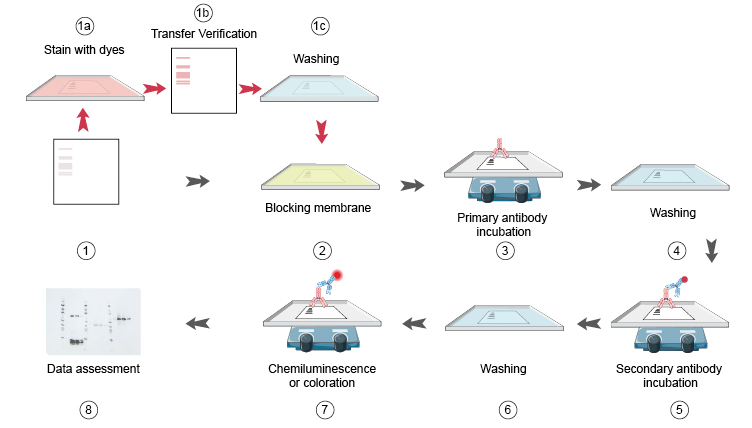
Western Blot Protocols (part 3) – Antibody Incubation & Gel Visualization
Development of competitive ELISAs for 17beta-estradiol and 17beta-estradiol +estrone+estriol using rabbit polyclonal antibodies.

17α-hydroxylase
About Author
